A system built around a human need
LunaCane explores safer and more accessible mobility support for older adults and people with limited mobility. The project brings embedded sensing, voice interaction, positioning, and cloud services into an assistive-device workflow.
I lead the student innovation project, with work spanning hardware–software integration, sensing-model development, data collection, and system-level testing.
My contribution
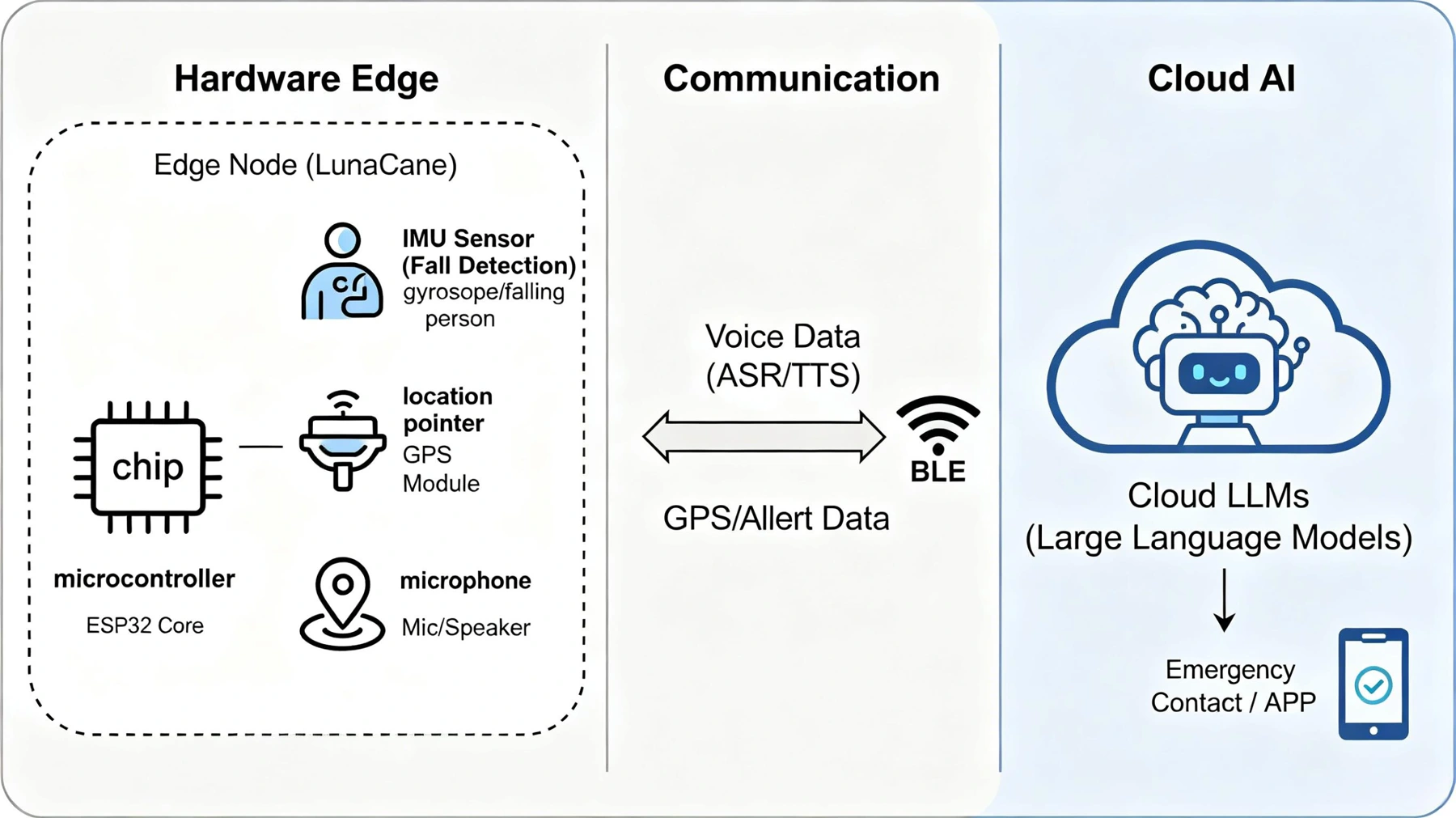
- Integrated ESP32-family edge hardware with motion sensing, microphone/speaker, positioning, and communication modules.
- Developed multi-sensor fall-detection logic and worked on gait-data collection, model training, and validation.
- Connected sensing with ASR/TTS and cloud language-model services for natural voice interaction and support workflows.
From signals to support
The architecture separates edge sensing, communication, and cloud intelligence. This makes the system boundaries explicit: what the device measures, what crosses the network, and what the cloud service contributes.
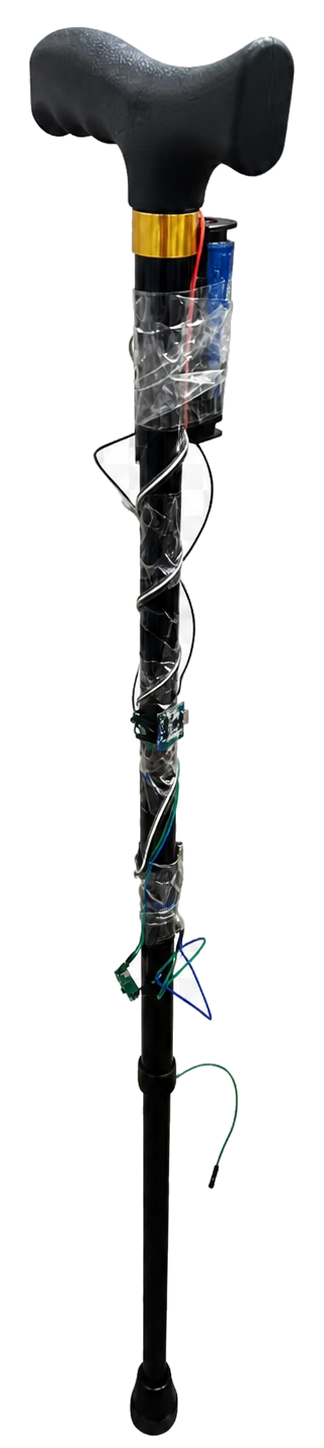
The architecture and cane image above are extracted from the supplied project materials.
Research and development progress
The project is connected to my work on sensor reliability and two invention patent applications. The applications have passed preliminary examination; the supplied evidence does not establish patent grants.
Signed cooperation documentation with Fujian Qiaolong Emergency Equipment Co., Ltd. outlines prototype testing, pilot evaluation, and channel support. The cooperation described is at the intent and prototype-evaluation stage.
What the evidence can tell us
Dataset evaluation, simulated or digitally injected attacks, and physical-device tests answer different questions. Each result needs its own test conditions, data split, and limitations. This page keeps these scopes separate and does not combine them into a single system-wide performance claim.
Next steps include broader user and activity coverage, physical-hardware validation of attack scenarios, and deployment-aware evaluation.
Explore the related sensing-security research